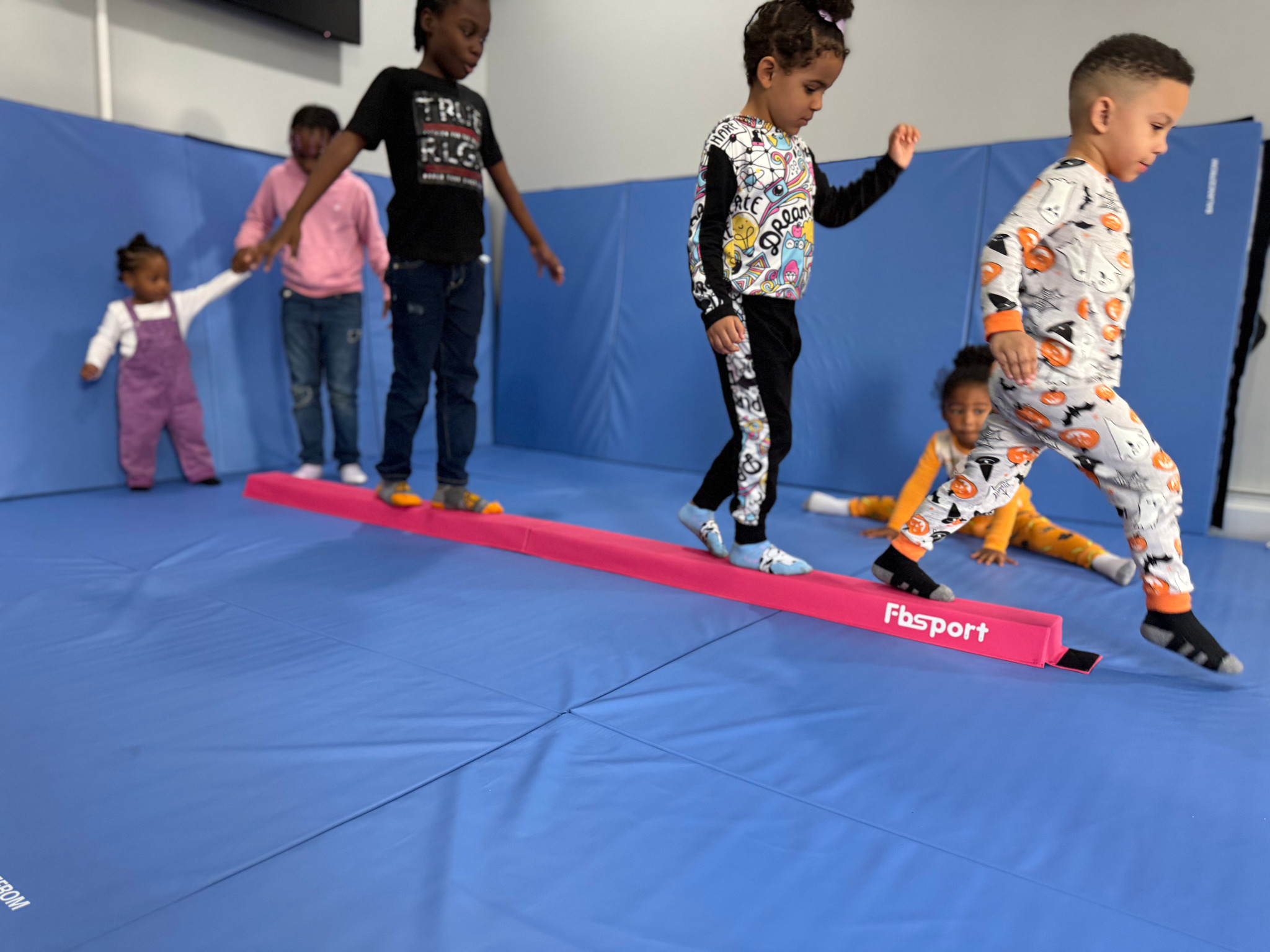
Put a group of young children in a room with soft mats and a balance beam, and something remarkable happens. They concentrate. They problem-solve. They take turns, cheer each other on, wobble, recover, and try again. To an adult it looks like play. To a developing brain, it is some of the most important work of the day.
Physical activity is often treated as the break between “real” learning. In early childhood, it is real learning.
What Balance and Movement Actually Build
When a child steps carefully along a balance beam, a lot is happening at once. Their brain is coordinating vision, muscle control, and the inner ear’s sense of balance in real time. Every wobble and recovery strengthens those connections.
Regular active play supports:
Gross motor skills like walking, jumping, climbing, and hopping Balance and coordination that carry into every physical task as children grow Core strength and posture, which later support sitting, focusing, and writing Body awareness, the sense of where your body is in space Confidence, because mastering a physical challenge feels like a real win
These skills don’t develop by accident. They develop through repetition, variety, and plenty of opportunity to move.
The Connection Between Movement and Learning
Here is the part many parents don’t realize: physical development and cognitive development are closely linked. Children who build strong motor skills tend to find it easier to settle into focused activities like storytime, puzzles, and early writing.
Movement also helps children regulate their energy and emotions. A child who has had time to jump, balance, and burn off energy is often calmer, more attentive, and more ready to learn afterward. That is why physical play and quiet learning work best as partners, not competitors.
Why Soft Spaces Make Bolder Play Possible
Young children need room to take healthy risks. Trying to balance, leap, or move in new ways is how they discover what their bodies can do. A padded, well-designed play space lets them do that with confidence, while caring adults stay close by.
When children feel safe to try, they try more. And when they try more, they grow faster, physically and emotionally.
Social Skills Hide Inside Active Play
Look closely at a group of children sharing a balance beam and you will see more than motor skills. You will see:
Turn-taking and patience while waiting a turn Encouragement and cheering for friends Following simple directions and group rules Learning to handle small frustrations and try again
These are the same social and emotional skills children need in a classroom, and they are practiced naturally through movement.
Finding the Right Balance Every Day
The goal is not choosing between learning and movement. The strongest early childhood programs weave them together throughout the day. Quiet activities like stories, art, and counting are balanced with active play that gets bodies moving. Each one makes the other more effective.
If you are evaluating childcare options, ask how movement fits into the day. Look for programs that treat active play as an essential part of development, not an afterthought or a reward.
Where Active Learning Meets Caring Support
At Tiny Hearts Childcare, we believe children learn best when mind and body are both engaged. Our licensed Bronx locations serve infants, toddlers, and preschool-age children in a nurturing environment that values both everyday learning and healthy, joyful movement.
If you would like to see what that looks like for your child, we would love to meet your family. Book a tour at Tiny Hearts Childcare or call us at (347) 297-3641. Come see where little ones grow strong, confident, and ready for whatever comes next.